The Royal title
On 11 Jan 2012, the bells were granted the title “Royal Jubilee Bells” by Buckingham Palace, on advice from the Deputy Prime Minister and the Minister for Political and Constitutional Reform.
City of London · St James Garlickhythe
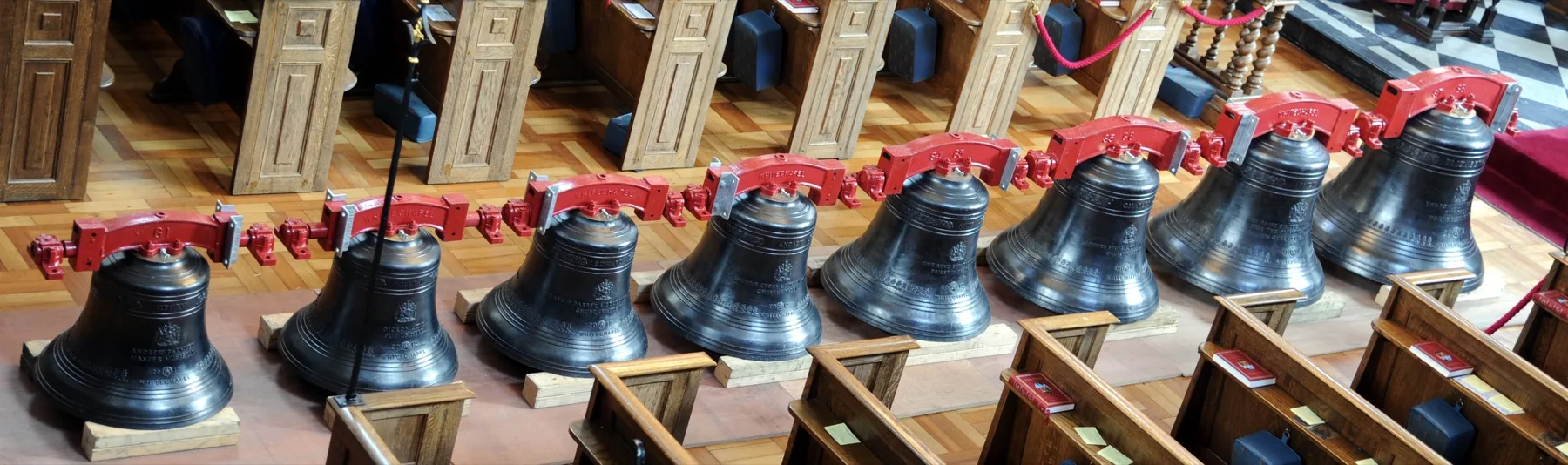
The famous Royal Bells that rang for the Queen’s Diamond Jubilee and now ring from St James Garlickhythe in the City of London.
Welcome
The famous Royal Bells that rang for the Queen’s Diamond Jubilee and now ring from St James Garlickhythe in the City of London.
The Royal Jubilee Bells are the set of eight bells that were cast for the church of St James Garlickhythe in the City of London, which were seen on television around the world leading the Thames Diamond Jubilee Pageant on 3 June 2012 for the Diamond Jubilee of Elizabeth II.
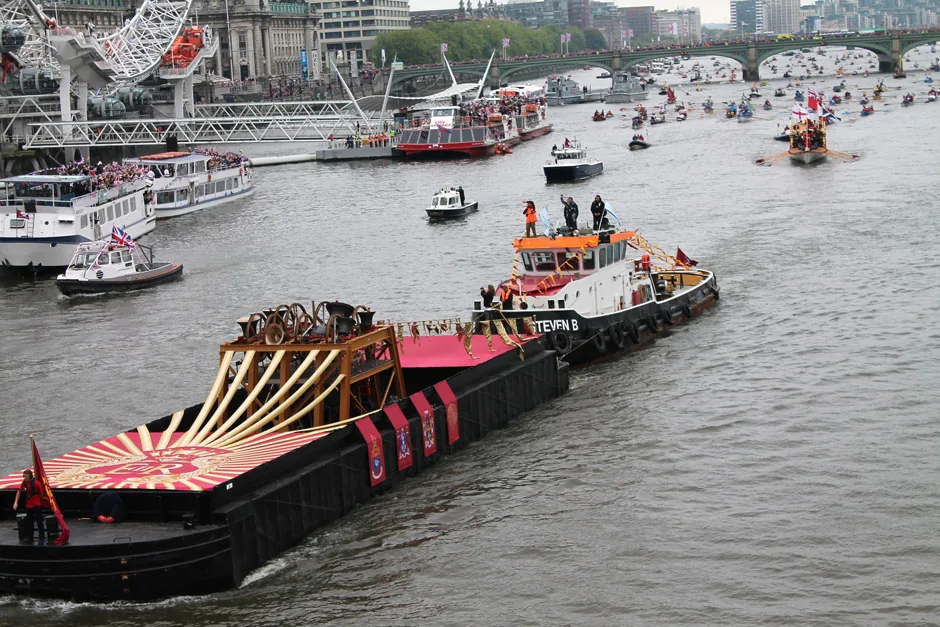
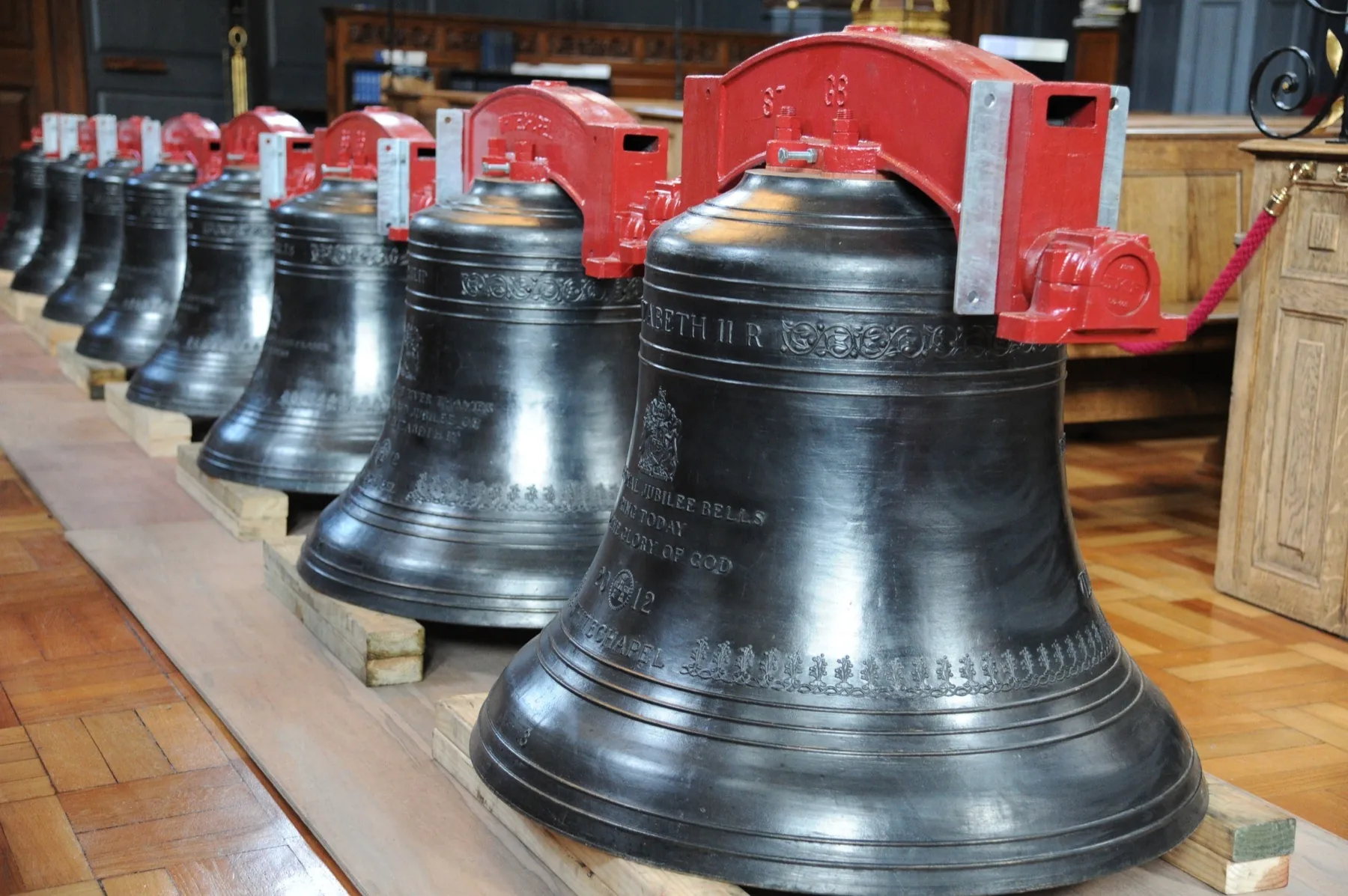
The Royal Jubilee Bells were cast at the Whitechapel Bell Foundry during February and March 2012. They are pictured here on the floor of the church of St James Garlickhythe prior to their dedication on 17th June.
The bells are a complete ring of eight, named for members of the Royal Family and sponsored by City companies, parish supporters and benefactors.
| Bell | Title | Name | Diameter (inches) | Diameter (cm) | Weight (cwt-qtr-lbs) | Weight (kg) | Nominal Pitch |
|---|---|---|---|---|---|---|---|
| Tenor | The Vintners’ Bell | Elizabeth | 37" | 94 | 9-1-25 | 481 | G sharp |
| 7th | The Dyers’ Bell | Philip | 33¼" | 84 | 7-0-12 | 361 | A sharp |
| 6th | The Glass Sellers’ Bell | Charles | 30¼" | 77 | 5-1-22 | 277 | B sharp |
| 5th | The Parish Bell | Anne | 29¼" | 74 | 4-2-11 | 234 | C sharp |
| 4th | The Bettinson Bell | Andrew | 27¼" | 69 | 4-0-11 | 208 | D sharp |
| 3rd | The Crace Bell | Edward | 25⅜" | 64 | 3-2-2 | 179 | E sharp |
| 2nd | Katherine | William | 24¼" | 62 | 3-1-8 | 169 | F double sharp |
| Treble | Nicole Marie Kassimiotis | Henry | 23⅝" | 60 | 3-0-21 | 162 | G sharp |
Each bell has a border round the soundbow of London Pride and the foundry mark of the Whitechapel Bell Foundry.
PRESENTED BY
THE VINTNERS’ COMPANY
(Arms of the Vintners’ Company)
VINUM EXHILARAT ANIMUM.
(Royal Arms)
THE ROYAL JUBILEE BELLS
RING TODAY
TO THE GLORY OF GOD
PRESENTED BY
THE DYERS’ COMPANY.
(Arms of the Dyers’ Company)
DA GLORIAM DEO
(Royal Arms)
WE RANG ON THE RIVER THAMES
FOR THE DIAMOND JUBILEE OF
HM QUEEN ELIZABETH II
PRESENTED BY
THE WORSHIPFUL COMPANY OF
GLASS-SELLERS AND
LOOKING GLASS MAKERS OF LONDON
(Arms of the Glass Sellers’ Company)
DISCORDIA FRANGIMVR
(Royal Arms)
LYNETTE STONE & WILLIAM FRASER
CHURCHWARDENS
(Scallop emblem of St James the Apostle)
ST JAMES GARLICKHYTHE
(Royal Arms)
THE REVD GUY TREWEEK
PRIEST IN CHARGE
CHARLES VERDEN BETTINSON
(Arms of the Bettinson family)
QUI SERA SERA
(Royal Arms)
VALERIE CROSS & GORDON HAINES
CHURCHWARDENS
CRACE
FORTITER
GIVEN BY JOANNA WARRAND
PARISHIONER AND FREEMAN OF
THE WORSHIPFUL COMPANY
OF PAINTER-STAINERS
AND FREEMAN OF THE CITY OF LONDON
(Royal Arms)
FRANCIS BARBER & GEOFFREY BROWN
CHURCHWARDENS
KATHERINE
TONY F. R. STOCKWELL
(Arms of the Joiner and Ceilers’ Company)
MASTER JOINER CEILER 1990/1991
PARISH CLERK HOLY TRINITY THE LESS
(Royal Arms)
DICKON LOVE
PUT US HERE
NICOLE MARIE KASSIMIOTIS
(Arms of the Musicians’ Company)
A PRICELESS AND ANGELIC TREASURE
“HAPPY MEMORIES OF THE PAST
JOYFUL MOMENTS OF THE PRESENT
AND THE HOPE AND ASPIRATIONS FOR THE FUTURE.”
(Royal Arms)
ANDREW PARMLEY
MASTER MUSICIAN
The tower of St James Garlickhythe has three other bells in it which predate the Royal Jubilee Bells. These are used to chime the hours and quarters, the angelus and can be used for other services. See Love’s Guide to the Church Bells of St James Garlickhythe in the City of London for more detailed information on both sets of bells.
History
The Royal Jubilee Bells are a set of eight bells that were cast for the church of St James Garlickhythe in the City of London, which were seen on television around the world leading the Thames Diamond Jubilee Pageant on 3 June 2012 for the Diamond Jubilee of Elizabeth II.
On 11 Jan 2012, the bells were granted the title “Royal Jubilee Bells” by Buckingham Palace, on advice from the Deputy Prime Minister and the Minister for Political and Constitutional Reform.
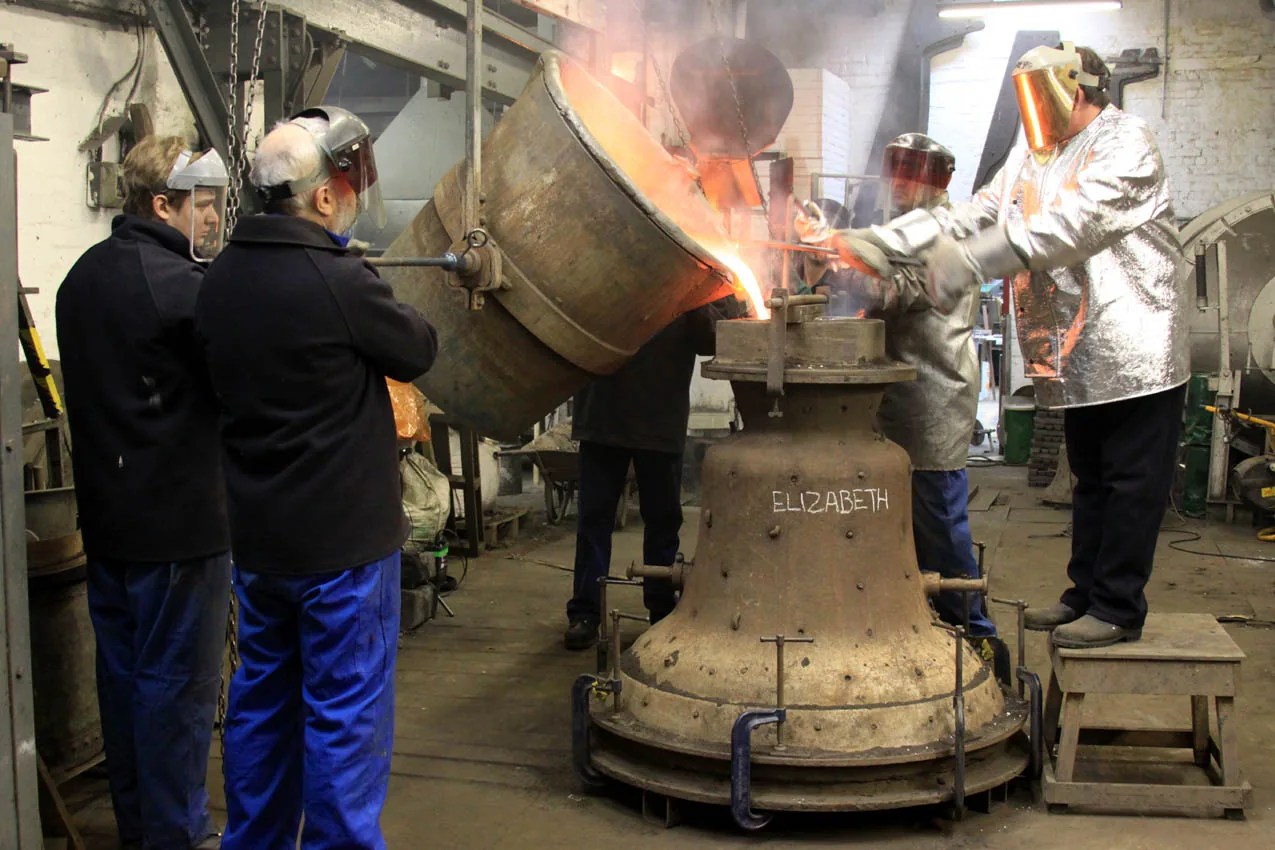
The project was conceived and run by Dickon Love, who had earlier installed new bells in the other City of London churches of St Dunstan-in-the-West (in 2012) and St Magnus the Martyr (in 2008). The bells were cast by the Whitechapel Bell Foundry in 2012. Bells 2, 7 and 8 were cast on 17 February with the remainder on 9 March. The casting of the bells, especially the largest bell, was extensively covered by the media.
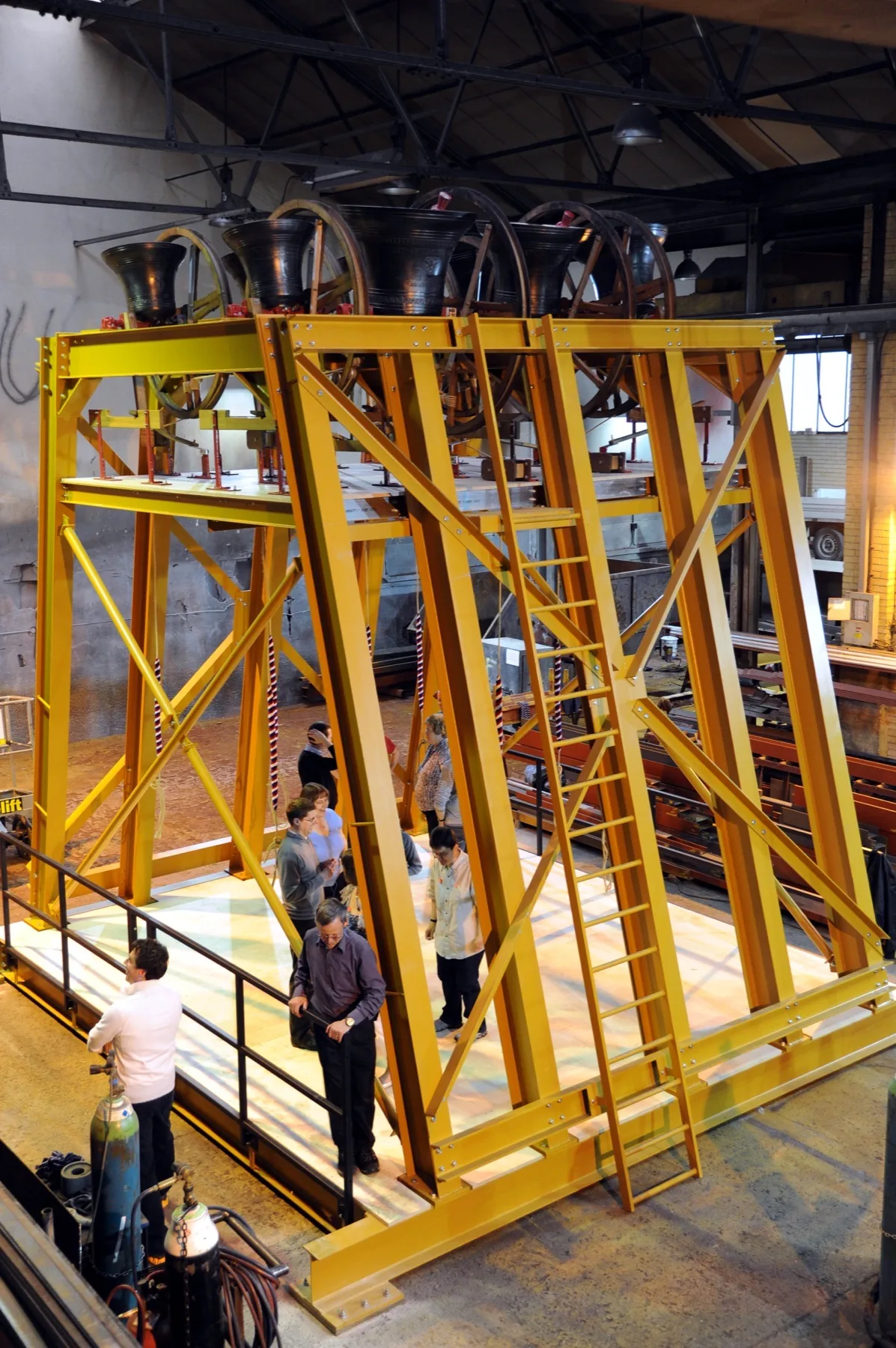
A 6m high tower and frame made of cast iron and steel was designed and first erected in a warehouse in Fircroft Way, Edenbridge, Kent. Following a visit by HRH The Prince of Wales to view the bells at the Whitechapel Bell Foundry on 15 May, the bells were hung in the new frame and a test ring took place on 17 May. The tower was then dismantled and taken to Denton Wharf near Gravesend where it was re-erected on the quayside and hoisted into the vessel “Ursula Katherine” on 24 May.
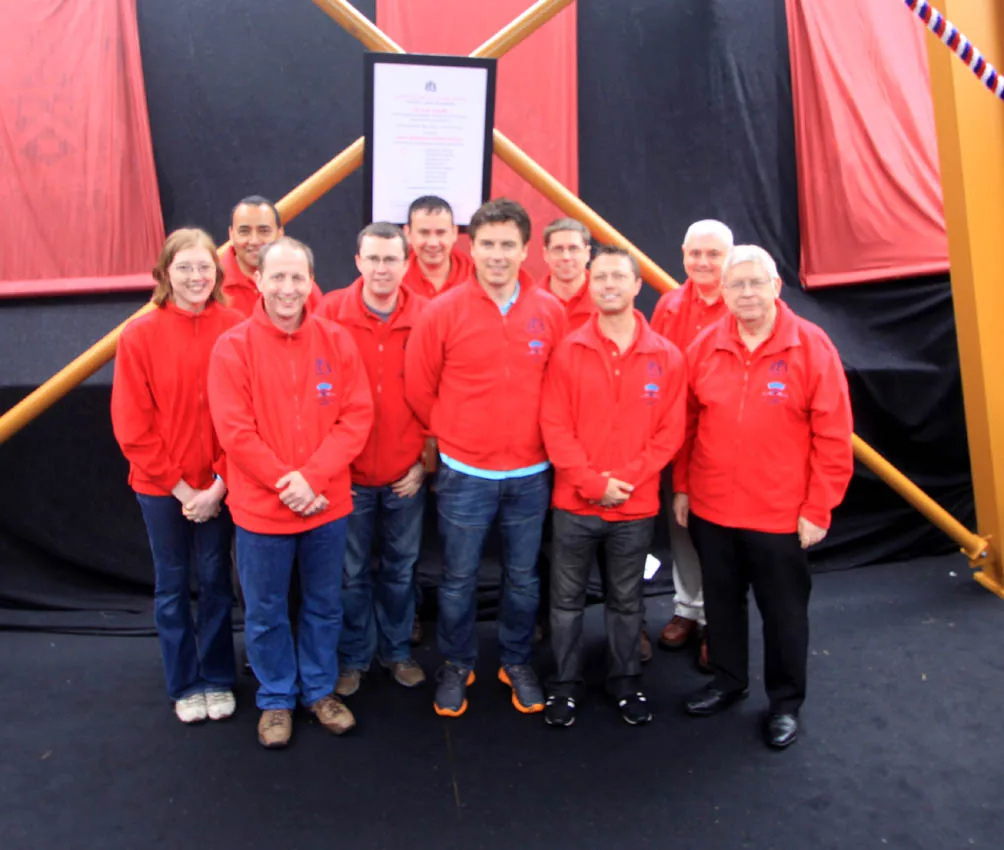
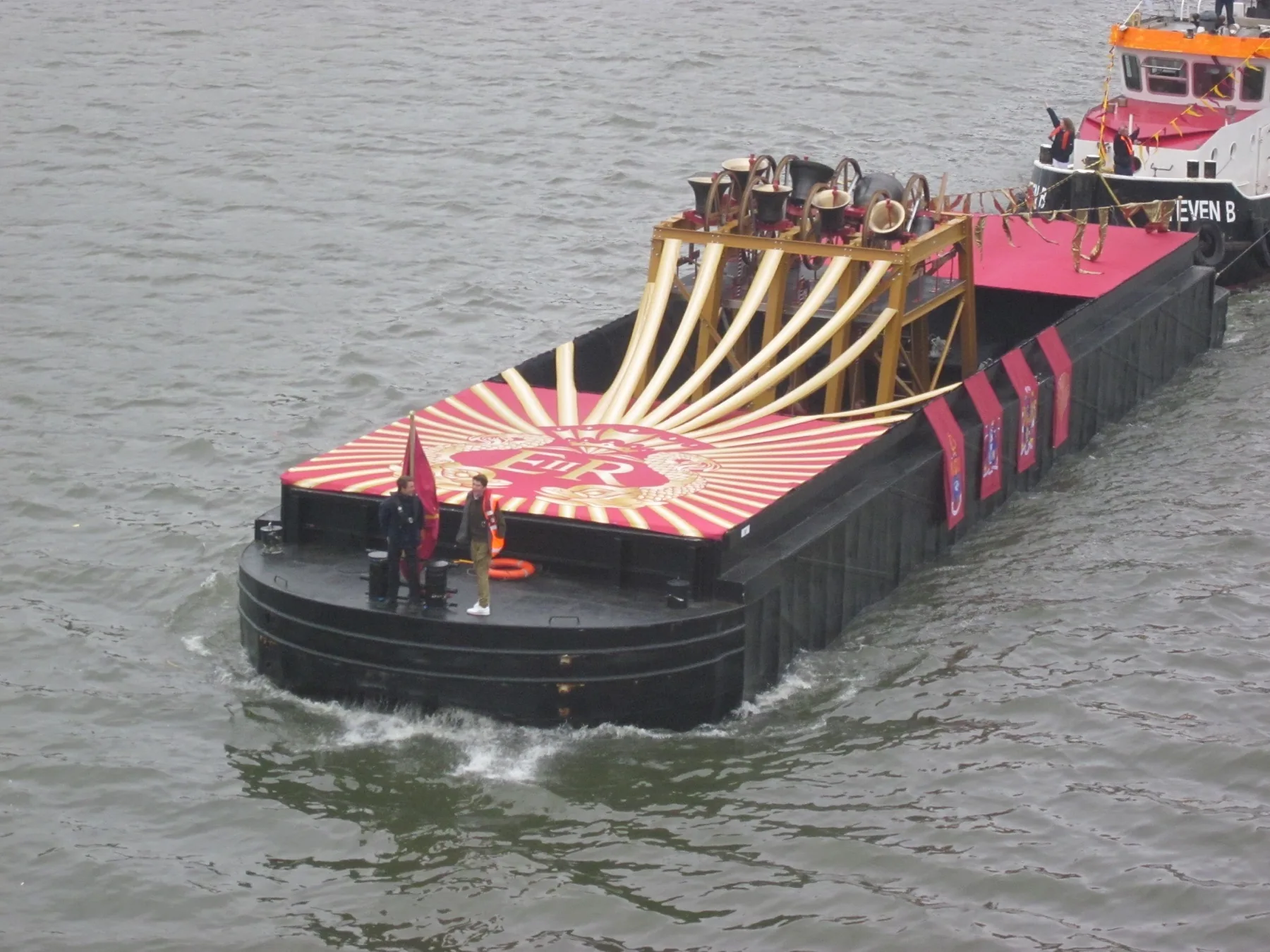
A band of nine ringers from the Ancient Society of College Youths, led by Dickon Love, met on 26 May to test the bells on the river. This was the first time that bells such as these were ever rung to changes on a river, and while the motion of the boat and action of the wind presented difficulties, the band was able to ring a full peal comprising 5056 changes in the method Cambridge Surprise Major, taking 3 hours 6 minutes.
The Thames Diamond Jubilee Pageant was held on 3 Jun. It officially started at Albert Bridge with the ringing of the treble bell from the Ursula Katherine, which moved into the centre of the Thames to lead the 1,000 vessel flotilla. A quarter peal was rung of 1250 Cambridge Surprise Major, taking 48 minutes, after which other pieces of change ringing were performed.
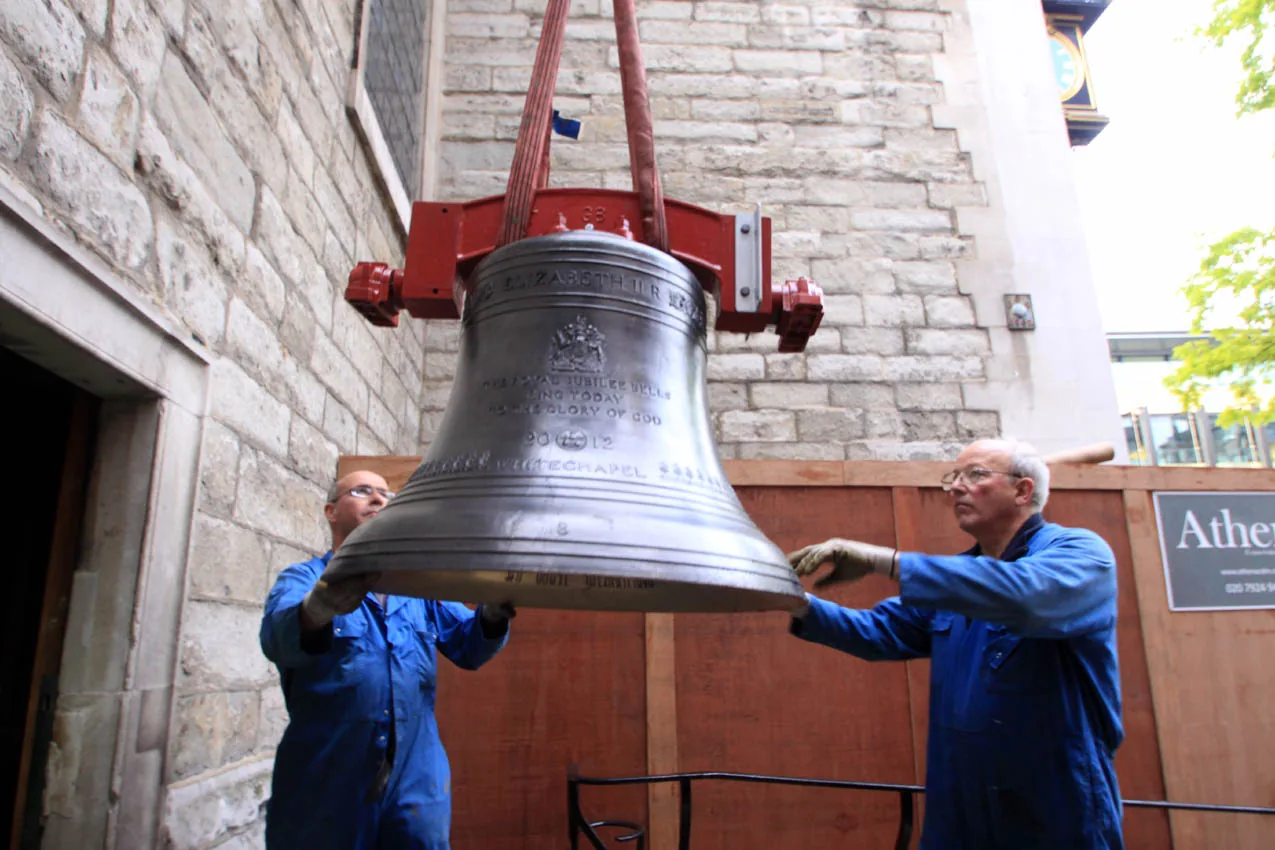
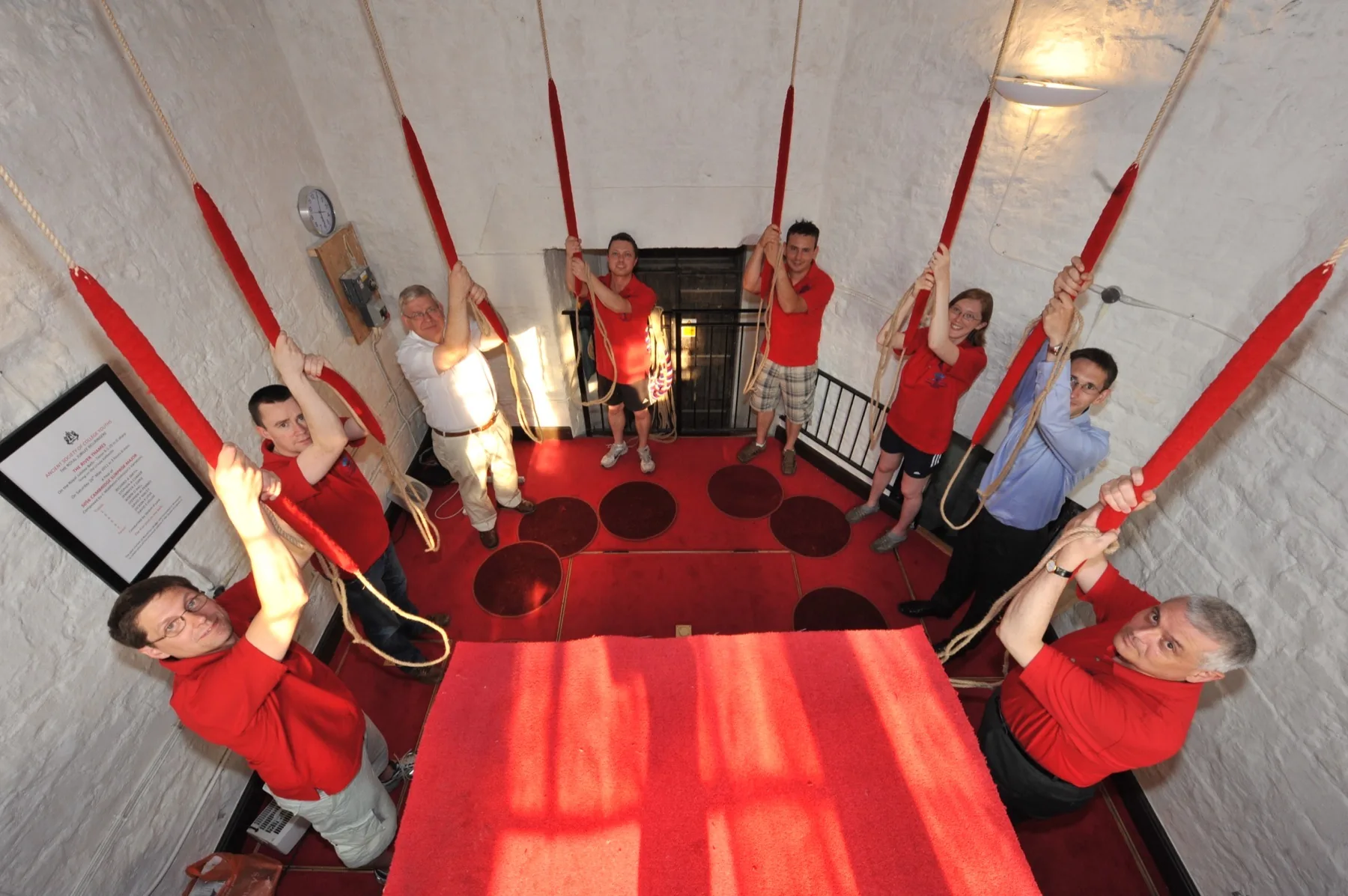
The bells and tower were dismantled on 6 Jun. During the previous three months, a new ringing room was constructed in the tower of St James Garlickhythe and a new bellframe was installed. The bells were delivered to the church on 15 June and arranged along the central aisle. They were dedicated by the Rt Revd John Waine on Sunday 17 June and hanging commenced in the tower shortly thereafter. They were rung for the first time in the church on 4 July. The first quarter peal was rung in the tower on 22 July after a service where their ringing was dedicated, and the first peal was rung on 25 July, comprising 5152 changes of Jubilee Surprise Major in 2 hours 56 minutes.
The training of a new band of ringers for the church commenced in September 2012. That band is known as The Royal Jubilee Bellringers, who hold practices each Thursday evening.
Come and Ring
The Royal Jubilee Bellringers were established in August 2012 to train people in the art of ringing the bells in the English style of change ringing. The ringers now look after the ringing at St Dunstan-in-the-West, St Margaret Pattens and Sunday morning ringing at St Magnus the Martyr. We meet every Thursday evening at one or more of our churches between 6:30 and 8pm. We normally continue the social theme in the local pub afterwards.
Anyone is welcome to come along and learn, but be warned, it is addictive!
We also welcome visiting ringers to the practice night, and normally have a string of visitors from all over the country and indeed the world who come and ring with the local ringers.
Groups of visiting ringers are requested to watch the parish’s short tower fire safety video before their visit to St James Garlickhythe.
The bells are also available for bands of ringers to visit at other times for outings, quarter peals and peals. Many people and organisations worked hard to see the bells come to St James Garlickhythe to add to the London tradition of bells ringing out over the city in celebration.
Once gained, bell ringing is a skill for life you’ll never forget and can open up a lifetime of experiences and enjoyment. There are five stages from beginner to experienced ringer and at all stages you’re helped out by a personal tutor and other capable bell ringers.
If you are interested in learning to ring, or to visit, please contact the Tower Captain, Dickon Love.
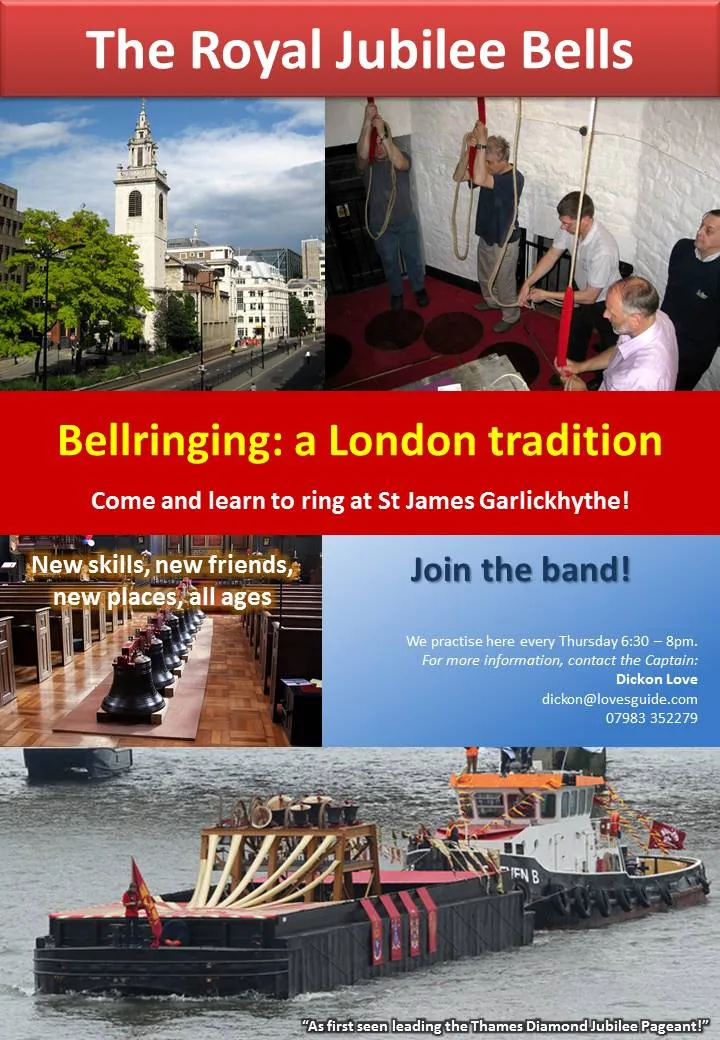
The first stage in learning to ring is to develop the skills to ‘handle’ the bell. That means the technique to control the bell using the rope. This is done on a one-to-one basis with your instructor. You will usually be taught each of the two movements, or ‘strokes’, in ringing separately and then helped to put them together. The technique is all about holding the rope correctly, moving with it and catching the rope at the right place and time.
Bell ringing is all about working as part of a team, so once you can ‘handle’ your bell you are quickly introduced to ringing with the rest of the ‘band’ of ringers. The key skills learnt are the ability to watch and listen to the ringing to know when you pull and sound your bell and to be able to vary the pace of your ringing to fit in with the group.
To get the most out of bell ringing, the challenges lie in change ringing. This is when bell ringers follow a pattern called a method, where the bells change the order in which they strike each time. You’ll learn about the structure of methods, how to remember them and how to move the place in the order that your bell strikes.
Once you have grasped the key skills of change ringing, there are more complicated patterns of methods to learn and also variations to existing ones you know. There is a world of opportunity to learn new things, and using the clever approach bell ringers have to memorise the pattern it is not even too difficult!
You finish the end of your learning to ring process by taking part in an extended period of bell ringing, usually about 45 minutes, which is then recorded in the official journal. There are then thousands more methods to discover, places to visit and new ringers to meet across the world.